Remove loose debris
Clear loose stones, mud and failed material as much as practical before placing repair material.
Wet weather repair
For buyers searching for a cold patch asphalt option that can be trialled in wet-condition repair scenarios, this page explains the practical use case, preparation points and limits.
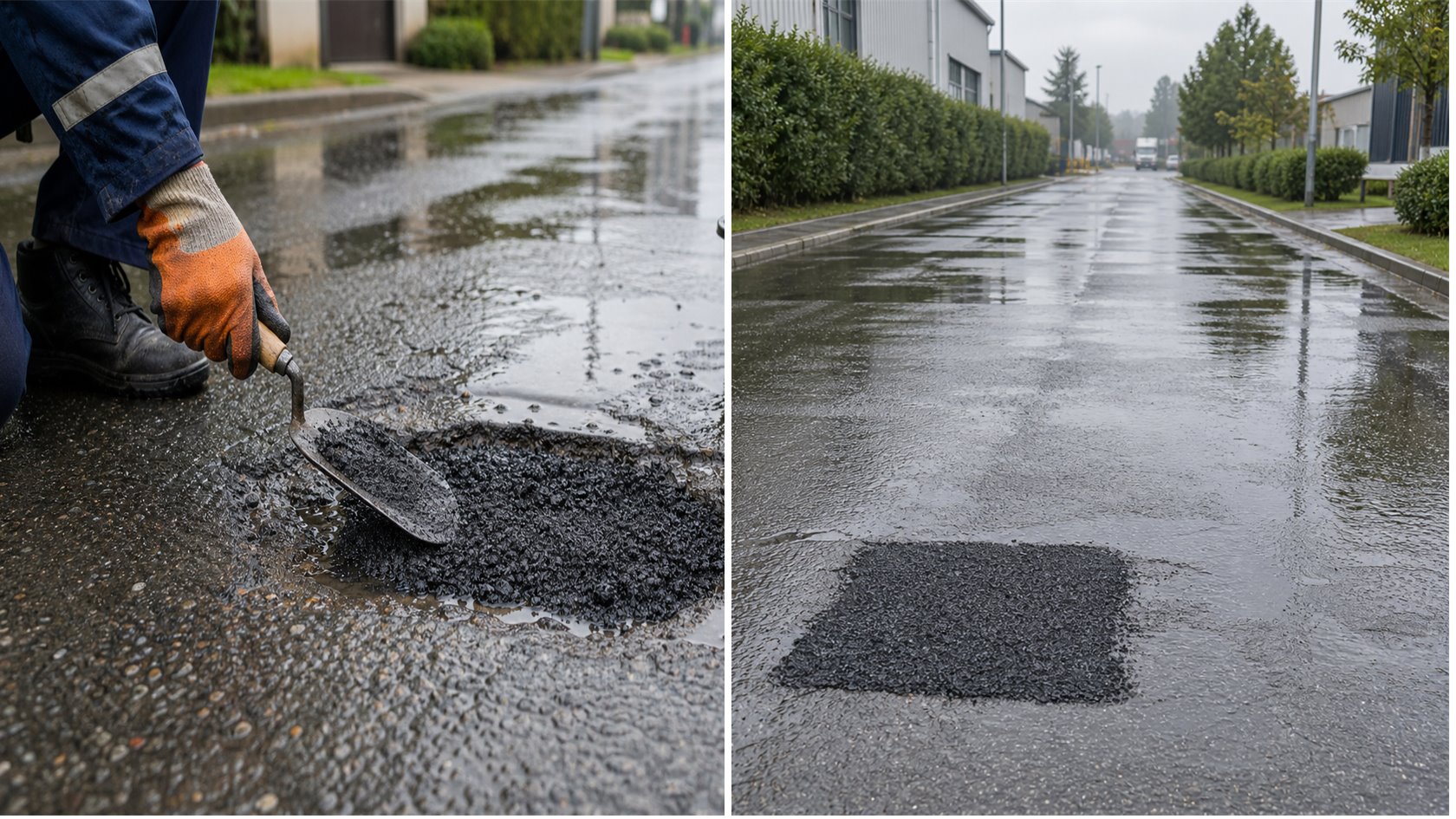
Repair condition
Road defects often need attention after rain, when potholes are visible and complaints increase. Waiting for a perfect dry window can leave a defect exposed for longer than the site owner wants.
This material can be reviewed as a wet weather pothole repair option where full drying is difficult. The sensible route is a controlled field trial that records water condition, compaction method and early traffic exposure.
Application guidance
Clear loose stones, mud and failed material as much as practical before placing repair material.
The material can be trialled in wet conditions, but removing excess standing water improves trial control.
Compaction is still essential. Record the method used so the repair result can be judged fairly.
Review the surface after traffic exposure, rainfall and temperature change to understand the site result.
Next step
Photos, depth, surface type and expected traffic help us suggest practical trial quantity and documentation for technical review.